Traditional festivals in Lithuania aren’t staged for tourists. If you live here long enough – or even just visit at the right time of year – you start to notice the calendar has its own rhythm. Ask a Lithuanian what they’re doing next weekend in February, and there’s a decent chance the answer involves a straw effigy and a fight between winter and spring.
Most of it is still genuinely observed, by families, in villages and in Vilnius apartments alike. Some of it traces back centuries before Christianity ever reached Lithuania, which is part of why it feels different from holidays elsewhere in Europe. Here’s a real guide to when each one happens, what actually goes on, and – honestly – which ones are worth planning around.
Traditional festivals in Lithuania: the full list
Nine dates worth knowing, from the chaos of late winter through to Christmas.
Užgavėnės
When: about seven weeks before Easter, on the Tuesday before Ash Wednesday. The date moves every year.
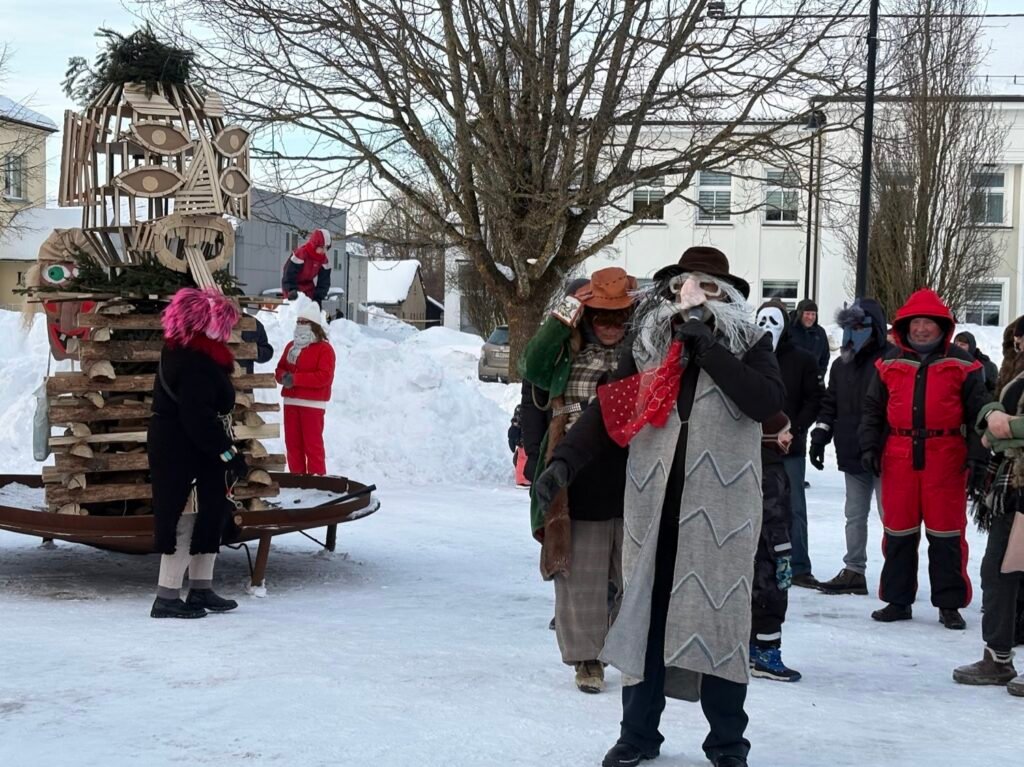
Užgavėnės is Lithuania’s version of Mardi Gras, and it’s loud on purpose. The whole point is to chase winter out, so people put on masks and costumes – the scarier or weirder, the better – and go from house to house making noise. A straw effigy called More gets burned at the end of the night, and there’s a mock fight between two characters, Lasininis (Bacon, standing in for winter) and Kanapinis (Hemp, standing in for spring). Spring always wins.
Expect bonfires, singing, dancing, and a lot of rich, heavy food before the fasting period of Lent begins: pancakes, donuts, a hearty stew called siupinys, and whatever meat is left in the house.
Honestly, this is one of the more chaotic and genuinely fun public gatherings in Lithuania. If you get the chance to go to an Užgavėnės celebration, take it – the costumes alone are worth the cold.
Easter
When: March or April, the date shifts every year with Easter.
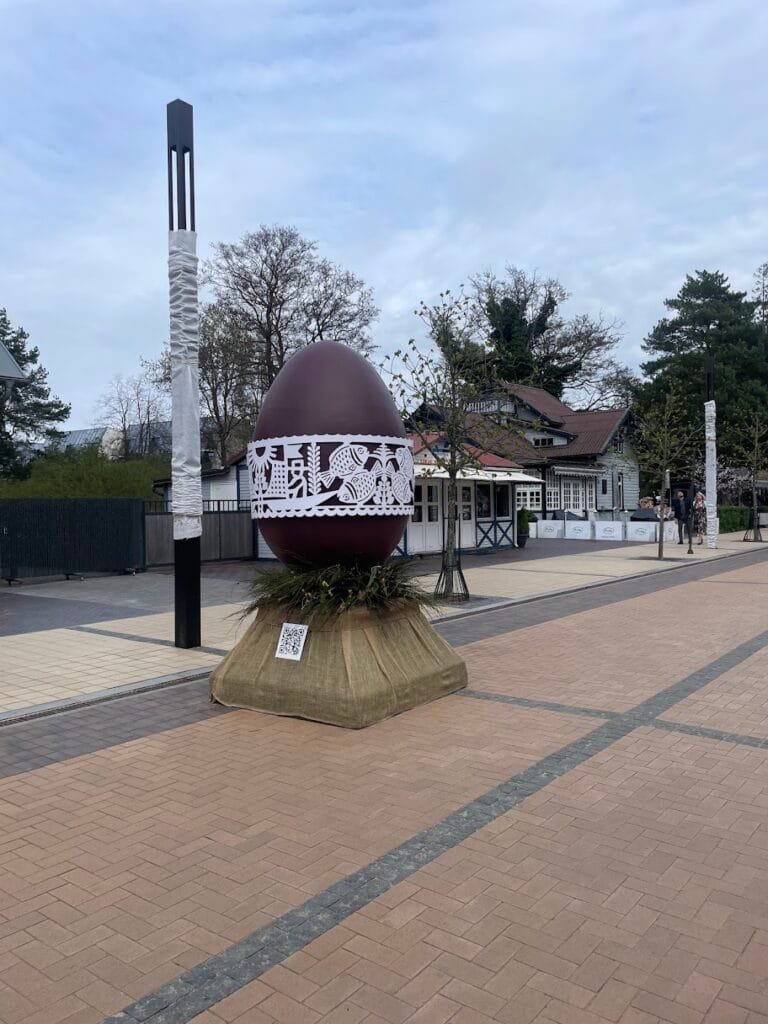
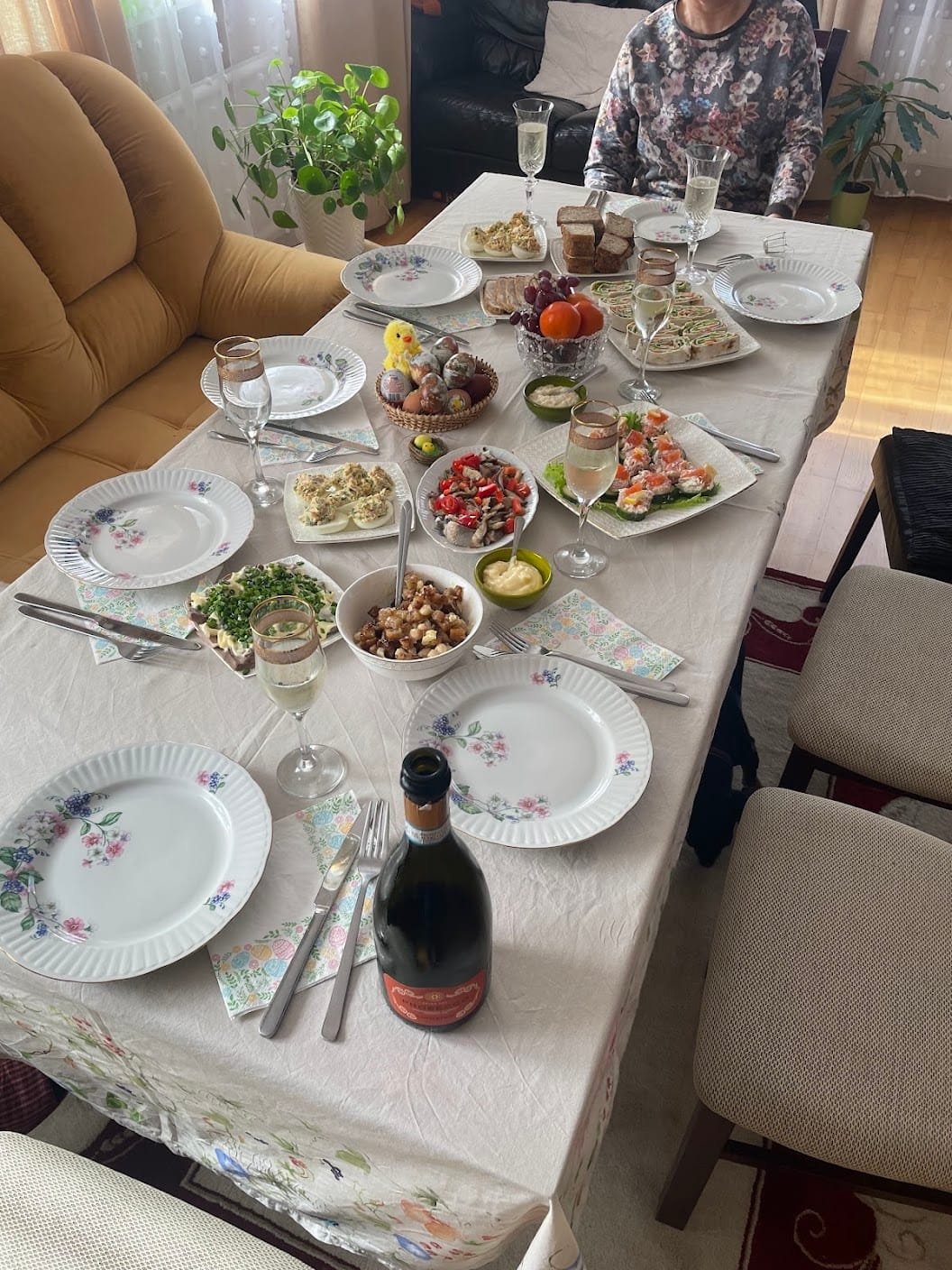
Velykos in Lithuania centers on margučiai, painted and patterned Easter eggs, which are honestly one of the most recognizable symbols of the country. Traditional dyeing uses onion skins, beeswax, and pressed plants rather than store-bought kits, and some families still work with a needle and melted wax to scratch in patterns by hand.
Beyond the eggs, expect egg rolling contests, the Velykų zuikis (Easter bunny), verbos – decorated dried flower and grass bundles carried on Palm Sunday – big family breakfasts, and swinging on outdoor swings, which ties back to older beliefs about renewal and growth.
Worth it if: you like watching a genuinely old craft up close. Museums and manor houses around the country run family egg-decorating workshops in the weeks before Easter, and regional styles of margučiai differ enough that it’s worth seeing more than one.
Joninės / Rasos
When: June 23-24.
This is arguably the liveliest traditional holiday on the calendar, and it blends two things: the pre-Christian Rasos (dew) celebration and the Christian feast of St. John. Either name works, and you’ll hear both.
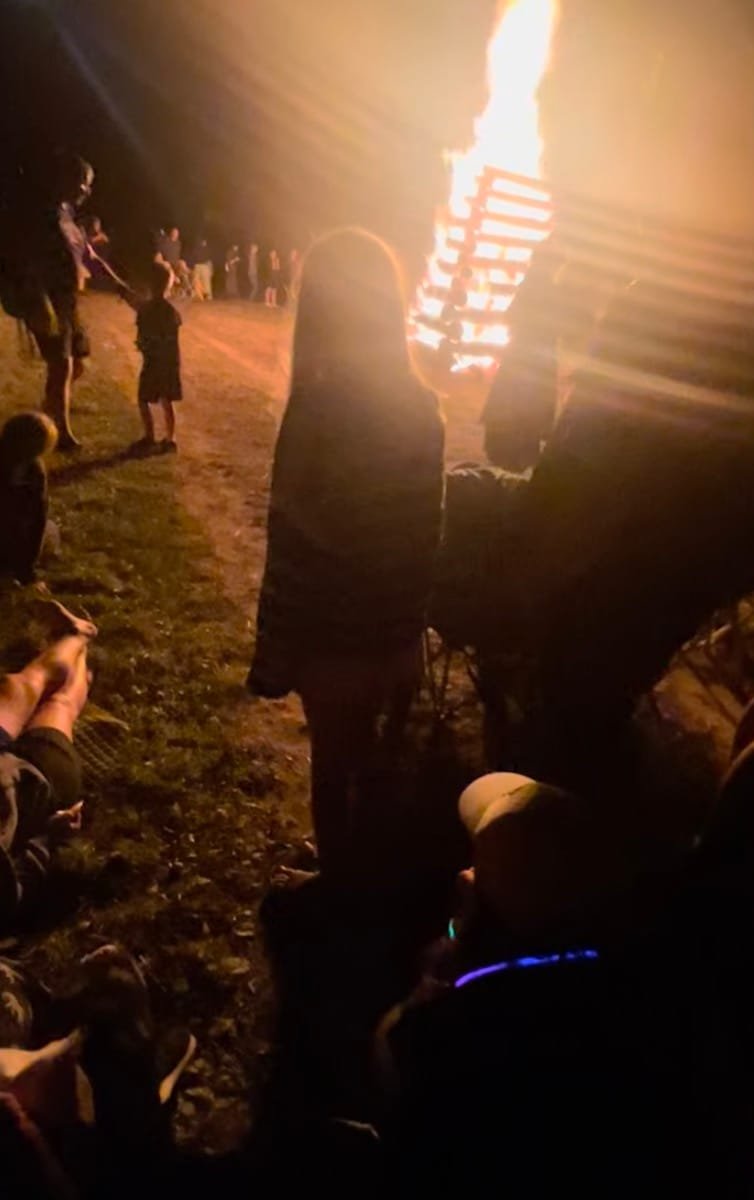
The night runs on bonfires, wreath weaving, floating flower wreaths down rivers, walking barefoot in the morning dew, jumping over fires, gathering herbs believed to be at their strongest that night, and singing until sunrise. There’s also the tradition of searching the forest for a mythical blooming fern flower, said to bring luck to whoever finds it.
Let’s be honest: ferns don’t flower, so nobody’s actually finding one. That’s not really the point. It’s an excuse to stay outside all night with friends around a fire, and that part is very real. It’s also a big night for name days, since Jonas and Janina are common Lithuanian names.
Žolinė
When: August 15.
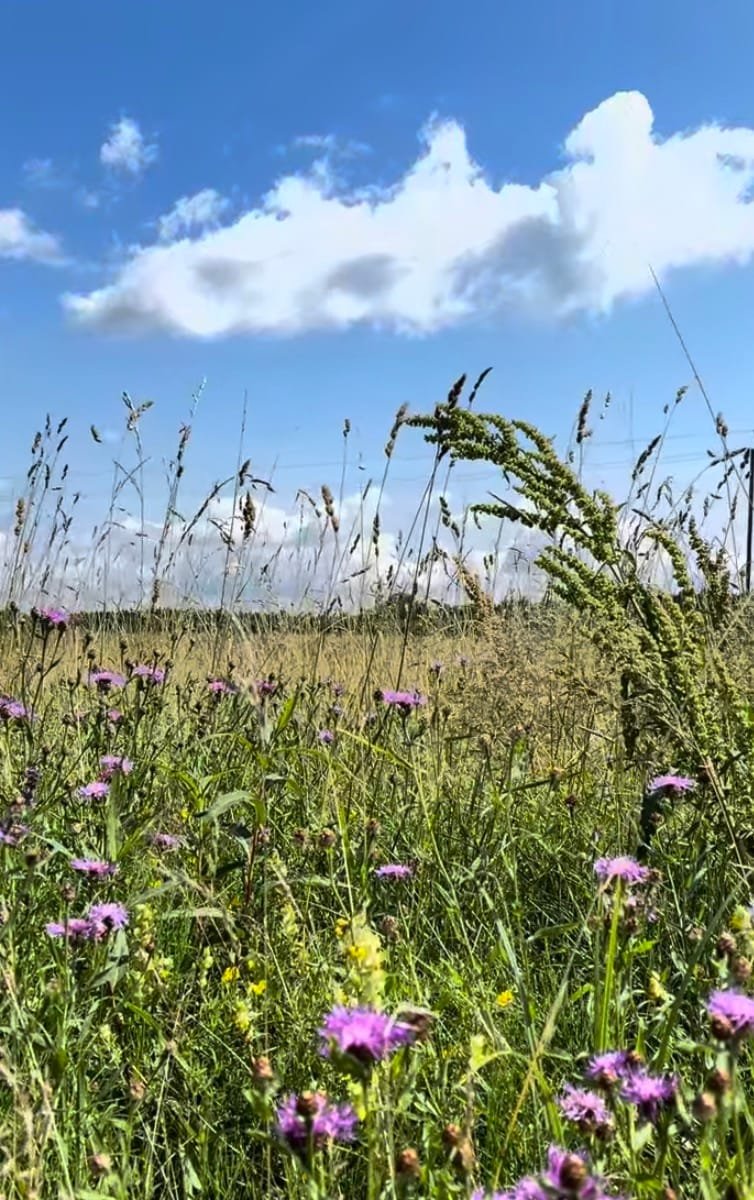
Žolinė marks the end of summer and the harvest, and it’s quieter than the other big holidays. People gather wild herbs and garden plants, build them into bouquets with grain and flowers, and bring them to church to be blessed. It’s less about spectacle and more about noticing the season turning – worth pausing for if you’re the type who likes that kind of thing.
Vėlinės
When: November 1-2.
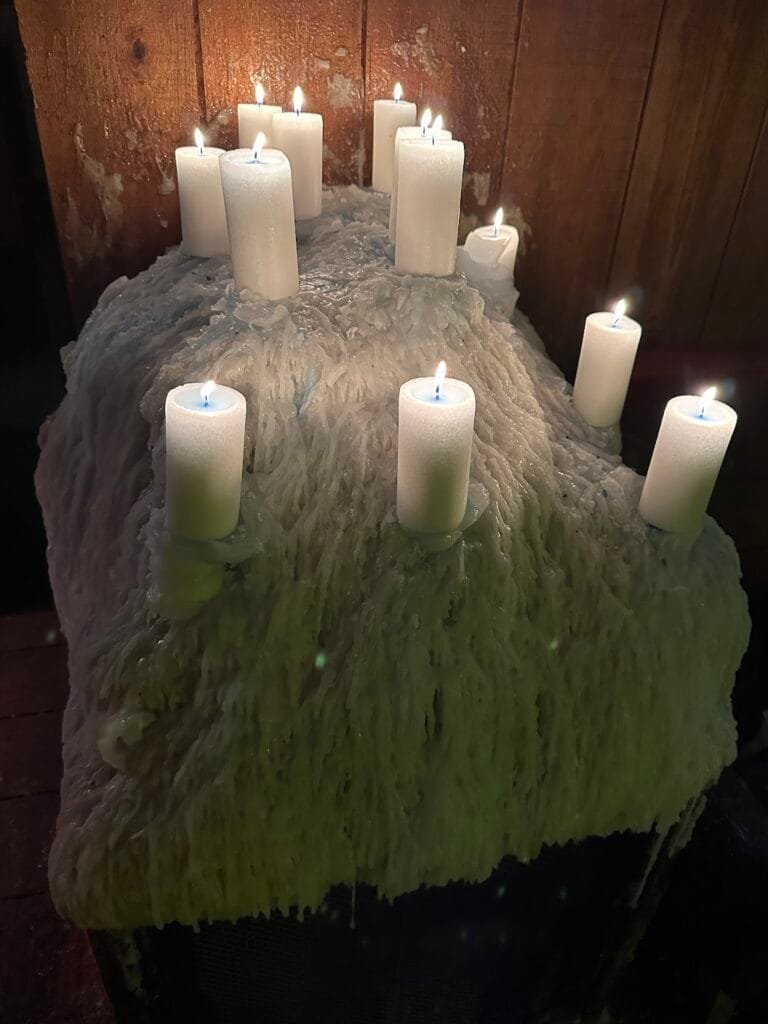
Vėlinės is All Souls’ Day, and in Lithuania it’s less a religious observance than a deeply held family tradition. People visit and tidy the graves of relatives, then light candles – thousands of them, across every cemetery in the country.
If you’re in Lithuania in early November, walk through a cemetery in the evening. I know that sounds like an odd thing to suggest to a visitor, but it’s one of the most quietly moving things you’ll see here. The candlelight, the silence, entire families standing together – it’s not somber in a heavy way, more like a collective, gentle remembering.
Kūčios – Christmas Eve
When: December 24.
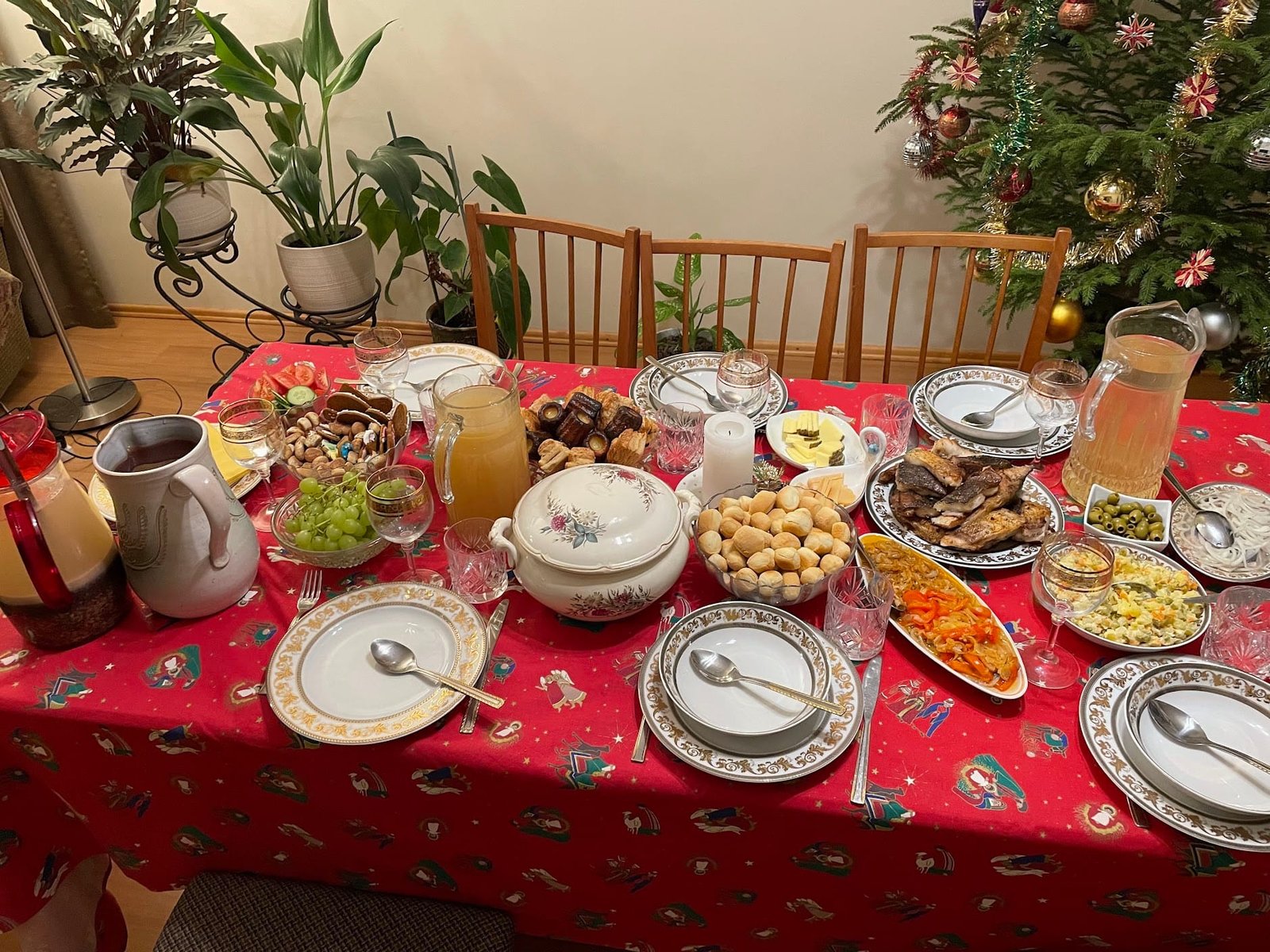
Kūčios is often the more important family holiday, more so than Christmas Day itself. It’s a meatless, fasting dinner built around twelve dishes, one for each apostle, and it comes with a whole set of small rituals: hay placed under the white tablecloth, sharing a thin wafer called kalėdaitis with everyone at the table, a few fortune-telling games, a moment to remember relatives who’ve passed, and waiting until the first star appears in the sky before anyone eats.
The food is distinctive: kūčiukai (small poppy seed biscuits, often soaked in aguonpienis, a sweet poppy seed milk), herring, mushrooms, fish, cranberry kisielius, and a handful of grain and vegetable dishes that don’t show up on the table any other night of the year.
Honestly, if you only get invited into one Lithuanian family’s home for one meal, make it Kūčios. It’s slower, quieter, and carries a lot more weight than the bigger Christmas Day spread the next day.
Christmas
When: December 25-26.
If Kūčios is the intimate, hushed evening, Kalėdos is the relaxed, sociable follow-up: visiting family, exchanging gifts, a decorated Christmas tree, carols, a festive table, and Christmas markets and events running in most cities. Vilnius’s Cathedral Square Christmas tree and market are the best known, but smaller towns run their own versions too.
Kaziukas fair
When: early March, around March 4, St. Casimir’s Day. The exact dates shift slightly year to year, usually landing on the closest weekend.
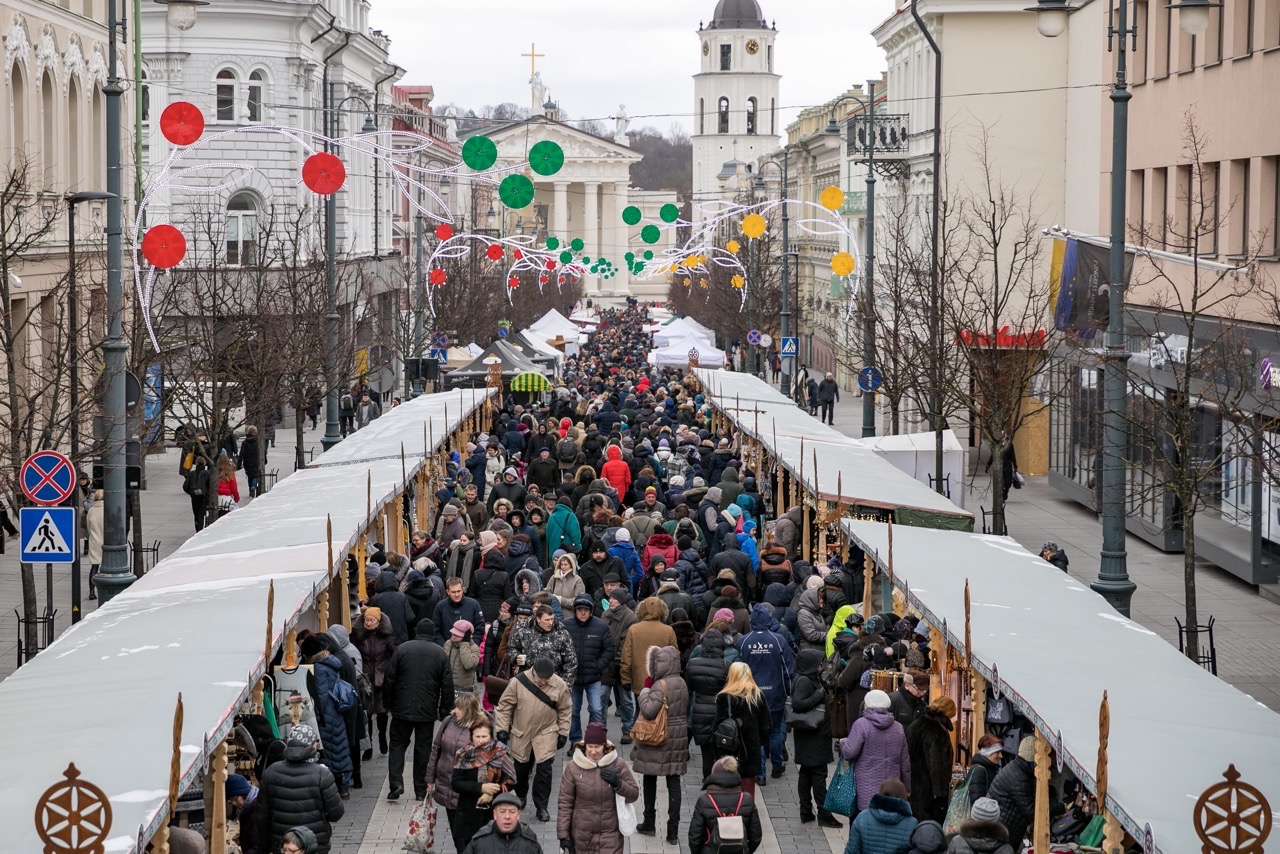
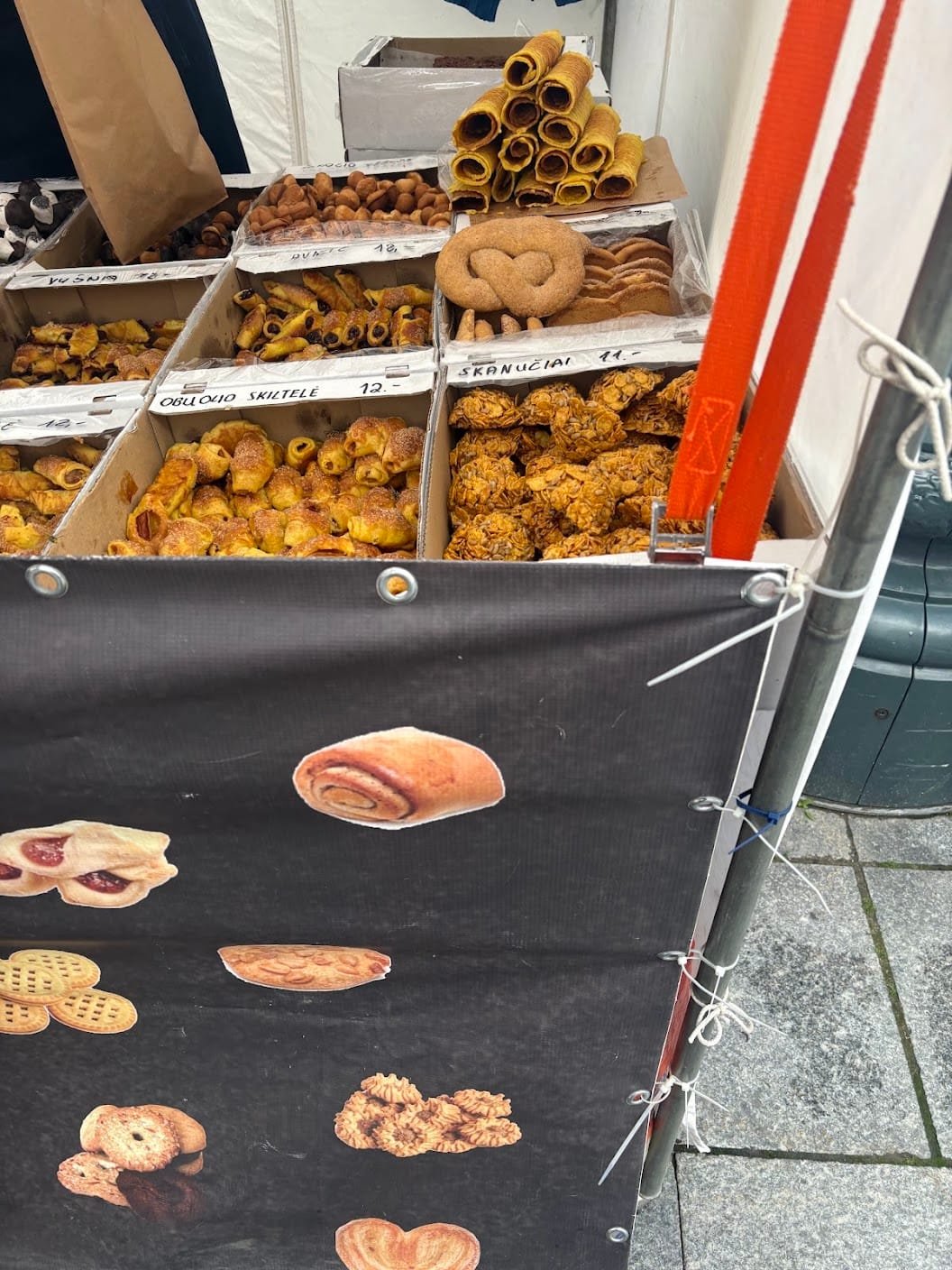
Kaziuko mugė is one of Lithuania’s best-known fairs, and in Vilnius it’s a proper takeover: for a few days, the Old Town fills with stalls selling verbos (those decorated dried flower and grass bundles), woodwork, ceramics, textiles, woven baskets, honey, cheese, bread, sweets, and pretty much anything else made by hand.
It’s named after St. Casimir, Lithuania’s patron saint, and started centuries ago as a trade fair tied to his feast day. These days it’s grown into the country’s biggest handicrafts market, with vendors coming in from all over Lithuania.
Worth it if: you want an actual handmade gift instead of a souvenir-shop magnet. Honestly, this is where I’d go shopping if someone’s visiting and you want to send them home with something real.
6 July- Statehood Day
When: July 6.
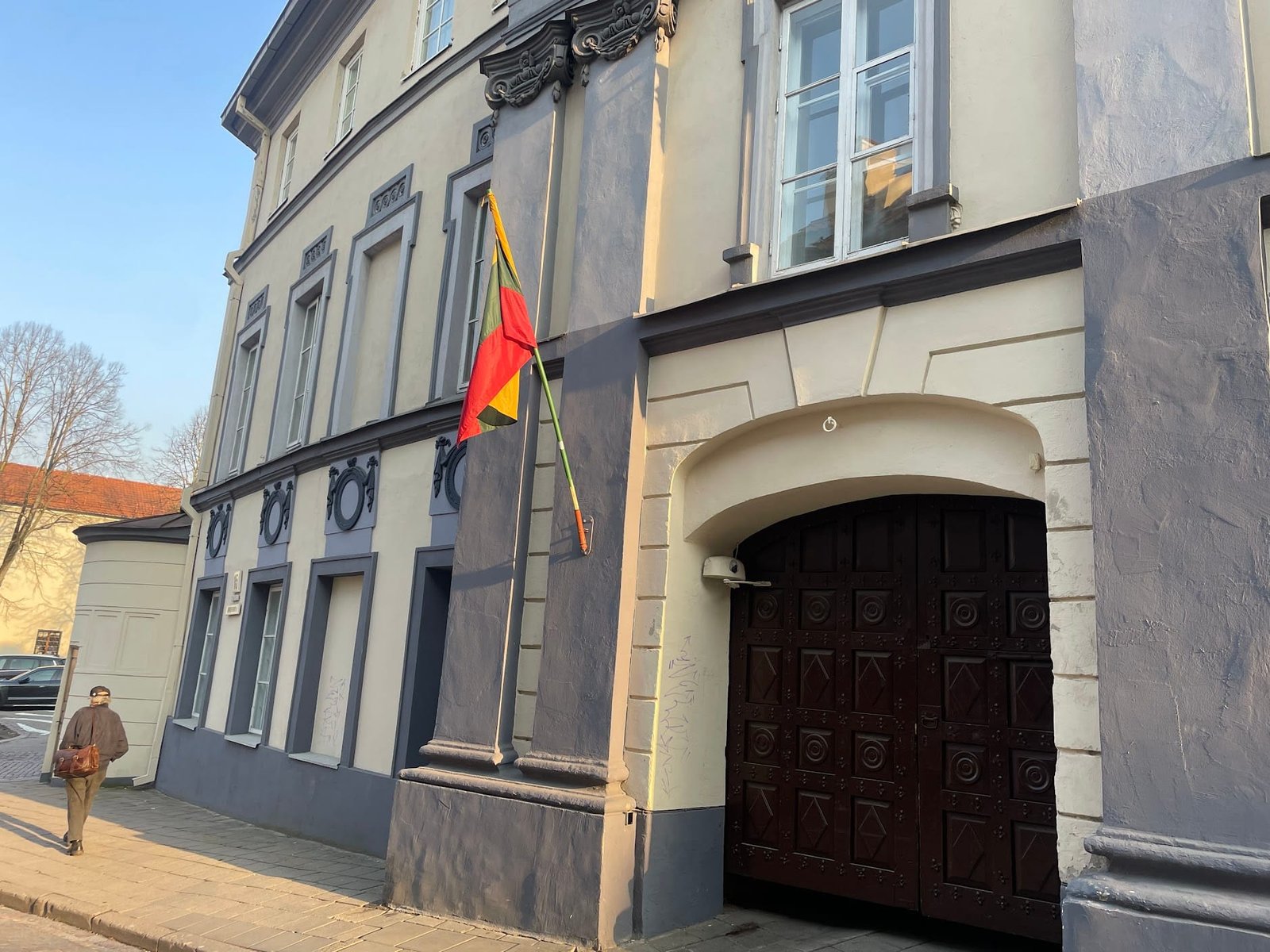
Statehood Day (Valstybes diena) marks the day in 1253 when Mindaugas was crowned King of Lithuania – the only time in the country’s history it had one. It’s a public holiday, but a quiet one: no parades, no fireworks, nothing forced.
The one tradition that’s really stuck is simple: at 9 p.m., people across Lithuania, and Lithuanians living abroad, sing the national anthem at the same moment. It sounds small written down, but honestly, standing in a square in Vilnius when it happens is more moving than you’d expect.
Most of these dates move a little each year (Uzgavenes, Velykos, and Jonines especially), so it’s worth double-checking exact dates before you build a trip or a weekend around one. But if you’re trying to understand Lithuania beyond the sightseeing checklist, traditional festivals in Lithuania are a pretty good place to start – it’s where a lot of the country actually shows up.
Want the wider picture too, concerts, city days, markets, and everything else on the calendar? Check our guide to the biggest events in Lithuania.